
Call This Friday to Get $50 OFF
Call us today
214-943-2424
Call This Friday to Get $50 OFF
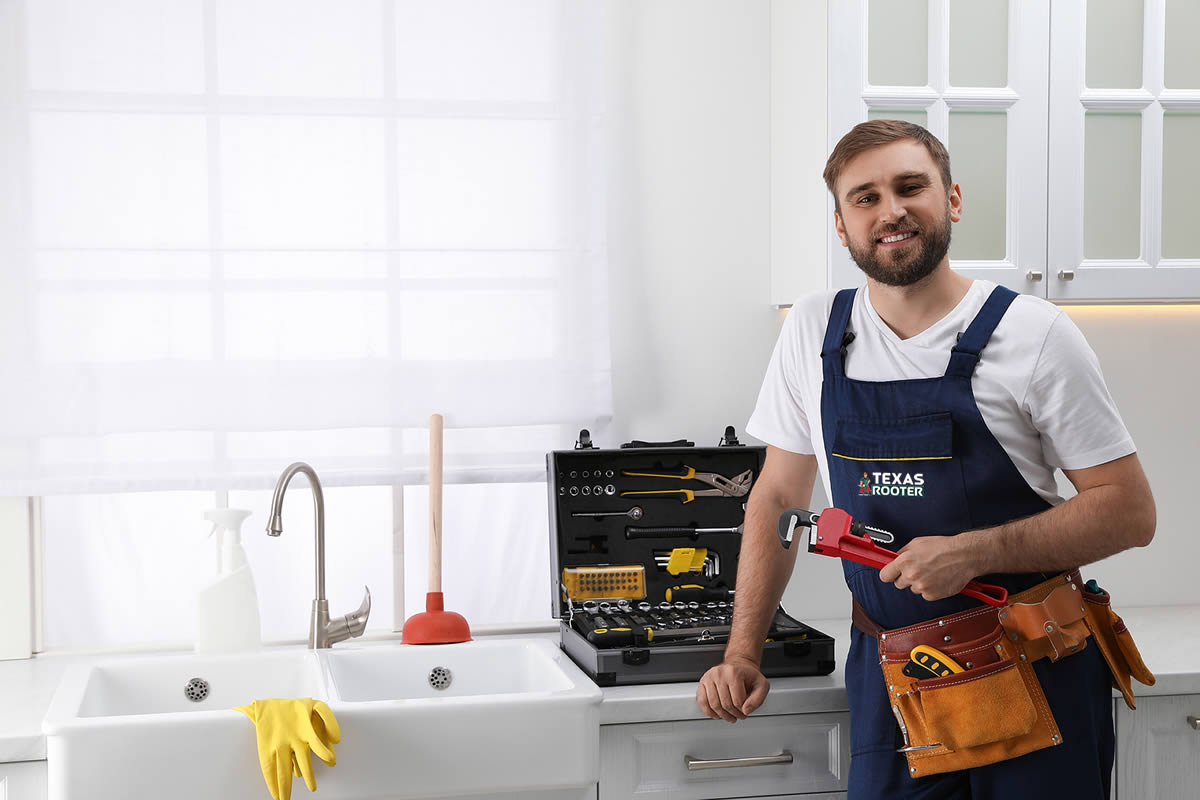

A kitchen may be defined by its appliances, but it comes to life through its plumbing. Without a working water supply line and drain pipes, what good is a farmhouse sink, expensive dishwasher, or Craft Ice refrigerator?
Still, many homeowners overlook the value of caring for their kitchen plumbing until something goes wrong. We’re here to say that an ounce of prevention is worth more than a pound of cure.
In this brief article brought to you by Texas Rooter, we highlight some simple maintenance habits that will help keep your kitchen plumbing running smoothly year-round. If you’re looking for a plumber in Arlington, TX, consider the local uniformed pros at Texas Rooter.
What goes up must come down, and what goes down the sink might come back up. Your kitchen drain isn't a garbage chute, even if you have a disposal. Tossing anything and everything down the drain is a surefire way to deal with clogs and backups.
Here are some things to KEEP OUT of the kitchen sink:
In short, these are notorious for causing blockages in the kitchen drains. When in doubt, toss it in the trash or compost bin instead.
We touched on this briefly in the last section, but it’s worth drilling down. Garbage disposals are convenient, but they still need proper handling.
For beginners, always run cold water before, during, and after using the disposal. Cold water helps keep oils solid so they can be ground more effectively. Other things to keep in mind:
If your disposal frequently jams, makes loud grinding noises, or struggles to drain, then it might be time for plumbing repair service.
Many homeowners only discover leaks when they smell mold, notice cabinet damage, or find pooled water under the sink. By then, the damage is done and you’re scrambling.
Get ahead of the problem by making it a habit to check under the sink every couple of weeks. Look for:
A stitch in time saves nine. Don’t wait until water damage takes hold. Call a plumber to fix leaks and damaged pipes sooner rather than later. Texas Rooter is always ready to help.
Water pressure that's too high puts stress on kitchen plumbing connections, accelerates wear on faucets and appliances, and can cause leaks at vulnerable joints. On the other, low water pressure can indicate that there is a leak in the water line.
Most homes should have water pressure between 40-60 PSI. Pressure above 80 PSI is too high and causes problems; pressure below that range can point to damage in the water line.
Even the most responsible homeowners can’t see behind walls or inside pipes. That’s why professional plumbing inspections are so important. Schedule an appointment once every two to three years to make sure everything is on track.
The trained and uniformed plumbers at Texas Rooter employ tools like moisture meters along with their experience and expertise to pinpoint the root cause of issues before they become problems. Call or message us today to schedule a convenient appointment.
Water can find its way into places where it is not welcome. Water can seep…
Read More
Periodic maintenance of the water heater is a long-term positive investment and money saver. It…
Read More
Homeowners often ignore plumbing leaks, thinking they’re harmless or they’ll go away on their own.…
Read More
How quickly should a main water line be repaired? The answer to this question is…
Read More
Homeowners usually concentrate on conserving electricity use, unaware that even the toilet can contribute significantly…
Read More